Saturday, March 22, 2014

The Fault in Our Stars - John Green


The writings of John Green are so mind-blowingly-beautiful that they leave me feeling much like the quote above. My thoughts are stars I cannot fathom into constellations.

And, did John pat himself on the back and smile that sly-writer's smile that writers get when they realize they've just written gold? If not, we need a time machine. 

Let me first say: I bought the novel this afternoon. I read it in just over two hours. I refused to leave a 6 foot radius. I laid on the carpet like a 15 year old girl. I cried. I sobbed. I cried and laughed at the same time. I was appalled, and then pleased, and then confused (because that is what John Green does to me). 

And before I even get to the review: yes. I recommend this novel

The Fault in Our Stars is primarily comprised of a raggedy bunch of cancer-fighting youth. Blind, missing limbs, and attached to oxygen tanks, they are trying to navigate the world of adolescence while simultaneously engaged in civil wars with their own bodies. John does a great job of touching on the very real aspects of the teenage experience - break ups, family drama, video games, high school; all of these things play a role in the lives of the characters.

The thing I've really come to appreciate about his writing is that it offers some real, something worth consuming, to the world of YA Literature. The characters featured in novels such as The Fault in Our Stars have a level of depth to them that is so, so very human. 

Augustus, Isaac, and Hazel transcend the imaginary character space. They are these people, and these people exist in the world. These situations happen. This is teenage life for someone, somewhere - and thank the universe for John Green because he keeps the bookshelves lined with words that matter. With experiences that are truly relatable. With character-people who provide that other side, the emotional perspective, the raw truth, the fact-of-the-matter.

Augustus is this fantastic blend of Holden Caulfield and Miles Halter (plus a dash of something completely unique to his own self). Hazel is a kind, smart, but still ordinary (self conscious, ANTM watching) teenage girl who compliments him perfectly. 

This novel navigates the tough stuff - death and dying, grief and pain - in a gentle but upfront way. It's a great read that pushes the boundaries and leaves you sobbing on the carpet of your parents living room like a little girl.

The universe won't look the same for a long time.
Or maybe ever again.

*Sidenote: It was really strange, reading this novel and being forced to re-encounter the grieving process. I didn't realize how many loose ends I'd left open in regards to deaths of close friends/family, and this novel wouldn't let me ignore them. It sits heavy with me, but in a very welcome way. Read it. 


Fifty Shades of Grey - E.L. James

I'm ashamed I'm writing this.
I was convinced by a friend to read Fifty Shades of Grey in Spanish (because she was, our friends were, it's good to keep up with language skills...that kind of stuff).

It was the most tortured 380+ pages I have ever read.
Thank GOD the author herself admits she's not a good writer, because she's not.

There was no character development (in fact, this may be the first time I've experienced character regression). The almost non existent plot moved at a snails pace. The whole "first person experience" is also cringe-inducing:

I see Christian. He is walking towards me in his grey suit and grey tie and he has grey eyes. His last name is Grey. I can feel my heart fluttering.

That's not a direct quote, but it's pretty damn close.
Luckily, reading it in Spanish, I just pretended it was all in the past tense (easier to do in another language).

Unfortunately, the authors lack of vocabulary was not as easy to avoid. I think I will vomit if I ever hear the word "drool" again.

Yeah. DROOL.

And, let's not leave out the whole "naive little girl who thinks she can convince the beast to change for her" over-arching theme of the novel. I am very worried for all the young ladies out there who read this book and think that Christian is the kind of guy to compete for.

He's an abuser. A handsome, somewhat-mysterious abuser with a past.
Condoning (wait, creating and then condoning) abusive relationships through writing? Horrific.

This book was an accident - and it reads like a disaster.
Stay away.


Wednesday, April 24, 2013

The Storyteller - Jodi Picoult

I saw this book sitting on the shelf at the student book fair. I'm an English teacher; it was called The Storyteller. I put it on my teacher wishlist and moved on with my life.

And then I read the book, which changed my life.

Seriously. I'd read 20, 30, 40 pages. Put it down, and then 10 minutes later come back. The multiple story lines weave beautifully (and surprisingly) through one another. The characters are refreshing - not stock characters by any means.

And the story. It is definitely one to be told. It's beautiful, poetic. It's full of charge, and full of tragedy. Love. Confusion. Wonder. Fear. Pushing boundaries, breaking norms.

In fact, it's so fabulous, I want to say as little as I can - the story is so precious, I don't want to spoil even a corner. 

Sunday, March 24, 2013

My Name is Not Easy - Debby Edwardson

I had my students write book reviews for this novel after we finished it. Here are some of the things they had to say:

"...Experience being ripped away from your family and forced to adhere to a culture you don't believe in, and which doesn't believe in you..."

"You will laugh, cringe, and cry all within 3 pages."

"The past never felt so current."

Words they used to describe this novel: encouraging, heart-breaking, endearing, sad, shocking, honest, communal, accepting, educational, confusing.

Truthfully, I don't think the students picked up on the subtle unconventional tones of this novel. You are dropped feet first into a culture you know nothing about, but at no time do you feel "out of the know." You as the reader become part of the instant-family in the novel.

I really appreciated the jokes about white people. So many times in life you hear phrases like "is it because I'm black?" or "You know how Mexicans/Natives/Asians can be."

But you almost never hear "Oh, you know how White people are."

This is a theme that occurs again and again - the white person as the outsider, the minority, the one that has strange customs and eating/religious habits.

I really enjoyed seeing my white students squirm in their skin. They've never had to think about themselves as the "other" and so it was really cool to have that experience with them, to help them see that people view white culture just as awkwardly as we view 'other' cultures and customs.

So - final word: read this book. There are some obvious typos and occasionally it gets slow, but that's life. And this book is teeming with it. 

Tuesday, July 31, 2012

Finding Miracles - Julia Alvarez

It's un milagrito that I even came across this book in the first place. I would never have encountered this text in my lifetime if it weren't for the fact that I'm teaching it this fall.

When I first embarked on the journey to find this novel, I didn't realize exactly what a journey it would be. I knew the book was a little bit older (copyright 2004), but I had no idea it was out of print. I went from used bookstore to used bookstore with no luck. Not even one Barnes and Noble in the entire state had a copy!

It's a good thing we have the internet these days...I visited the Amazon.com gods and they delivered unto me a perfect copy of Finding Miracles. Because the text is out of print, I was pretty skeptical. What could an old book have to offer a class of 13 year olds?

Let me just tell you: I was blown away. This book spoke to me in ways I would never have imagined - and I'm no longer an adolescent. Alvarez's style has a natural rhythm that rocks you ever so gently until you can't decipher whether you're actually living in the book, or your own life. It rocks you gently, but it rocks you nonetheless.

The story of young Milly and her search to find her roots is something I think people of all ages can connect with. We all have a fascination with "where we came from" and "who we are." So many times, I hear students hashing out "I'm 1/4 this and 1/4 that..." as if to justify their existence in a way that is unique to them. We see this same thing happening with Kate - Milly's sister, who is the birthchild of their parents.

I appreciated the natural feel of the relationships between characters. Nothing in this novel felt contrived! I'm so excited to teach it this fall - I know it's a text that the students will love. And, of course, it's left its imprint on me for life.

Friday, July 6, 2012

The Litigators - John Grisham

John Grisham is a pretty good writer. Granted, he is a story teller of things law related and that's kind of a niche that you have to be into to enjoy his stuff. I recently read The Litigators on my flight home from Rome. For the most part, I enjoyed it. Grisham has a gift for bringing characters to life and giving them hilarious personality quirks and flaws.

My biggest criticism is this: I felt like I was watching an episode of Law and Order: Chicago - an episode that would not end. There was enough legal jargon in there for me to get lost and about half way through the book it became very easy to predict what was going to come next.

So, if you're getting on a plane and desperate for a read...The Litigators isn't a bad choice. Though you might want to brush up on your law knowledge ahead of time...


Sunday, December 4, 2011

Persepolis - Marjane Sartrapi


Persepolis isn't just a book that you read, it's a book that you fully experience. You live the words on the page. As someone who knew virtually nothing about the Iranian revolution during the 1980's, I found myself completely invested and ready and willing to learn about this major historical event.

As someone who isn't the biggest fan of history books, I was surprised at how completely invested I was in the story. I suppose that it could have something to do with the fact that it is the memoir of a young girl, or the fact that one of my best friends is an Iranian, living in Tehran.

There are a lot of things to be gained from reading Persepolis. Whether you gain a knew knowledge or understanding about this event, or simply find that you are able to appreciate the themes of love, life and resistance in a time of war, it is not a graphic novel to skip over. The message is powerful, and it definitely leaves you wanting more (good thing there is a second half)!

Saturday, December 3, 2011

American Born Chinese


I grew up in Japan, so I am no strange to the world of graphic novels. This one was slower than most of the ones I've encountered, but the way it all comes together in the end is awesome! Not all graphic novels end up providing the reader with such a powerful message. The "slower" pace of this graphic novel is necessary to its message, as it deals with issues of identity. The last time I checked, identity formation doesn't happen over night.

I really appreciated the idea of weaving "traditional" and "modern" narratives together that occurred in American Born Chinese. I was somewhat confused about the triple narrative going on as I read, but because it was so strange .... I didn't want to put it down. I also enjoyed the quirky nature of the book (with an intentionally backwards book cover that makes you look like you're reading upside down).

I feel like there are a lot of preconceived notions about graphic novels. I have to say, young adults (and even grown adults) who choose to read graphic novels over regular novels are not missing out on the literary merits afforded by "regular" novels. The messages are equally as powerful and, in fact, the words have to be chosen in a more deliberate way because there are fewer in a graphic novel.

I thoroughly enjoyed following Jin Wang on his journey, and at the end I had to laugh when I flipped back over to the comic (which I've embedded above) and thought, "If only he had never forgotten where he came from, he never would have forgotten who he was."

I highly recommend this graphic novel!

Monday, November 28, 2011

The Ear, The Eye and The Arm


I've never been a huge fan of science fiction, but this book has me second guessing that notion.

One day, in the year 2194, Tendai, Rita and Kuda set out on what is supposed to be a simple, innocent day trek for a scout badge. It turns out to be the biggest adventure of their life time, full of trouble, crime and mysterious folk. The way the past and the future are tied together is incredibly fascinating, and definitely gives you a different perspective into how different cultural pasts have transformed (and will continue to transform) over time. The Ear, The Eye, And The Arm definitely requires to step outside of yourself and see things from a totally different perspective.

One of the most interesting things in the novel was the feel that Tendai, Kuda and Rita are living in a post-racial world. The Mellower is given a race, but he is also from a tribe, and has been inhabited by a spirit of a different tribe despite his physical appearance. There is no greater or lesser value placed on him because of his skin color. There aren't any racial signifiers to describe Tendai, Kuda and Rita other than what is given in context (their African ancestry is a hint, as well as the italicized words), although the three detectives are briefly described in racial terms.

Other interesting topics that come up are environmental issues, authority issues, things related to coming of age and the idea of a Utopia.

Personally, I enjoyed the novel. I feel like it is laced with a variety of things to discuss in a book group or as a class or even just with your family. I read this book out loud to my little sister (who is 10) and she loved it. She is an accelerated reader (reading at almost a 10th grade level) so I wouldn't recommend this book for most 10 year olds, but I would definitely use it with middle and high school aged youth.

Sunday, November 27, 2011

The Hunger Games


Living in a post-apocalyptic world, Katniss and the other inhabitants of the various districts are forced to participate in constant reminders of the punishment appropriated to those who rebel against their government. As book one in a trilogy, it paves the way for conflict, romance, loss, uprising, revenge and more.

There are a lot of interesting aspects to The Hunger Games. Katniss is a tomboyish female lead character, who trapes around with a bow and arrow, hunting and trading on the black market to support her family. She has a serious attitude, but despite her somewhat awkward and rigid nature in the beginning of the trilogy, the reader still is invited in to get to know her. After you've invested the time in getting to know Katniss, you can't put the book down. Katniss is definitely a character that anyone can connect with and relate to, boy or girl.

Despite the novel's somewhat predictable nature, there are enough moments of suspense and surprise to leave the reader satisfied. There are also pretty heavy (and easily accessible) themes of living in an economic depression, isolation, starvation, oppression and corrupt governments. The novel also plays with traditional gender roles - this is especially evident in the portrayals of Katniss and Peeta - as well as others, like Cinna.

The Hunger Games is an "I can't put this down" cover to cover read, and the other two books in the trilogy are equally as addicting. The books take you on an emotional ride that leaves you with a new appreciation for those who have endured a rebellion against government oppression, and also a deeper appreciation for the value of individuals in society.

Sunday, November 20, 2011

Voices - Ursula Le Guin


Books. They have always been at the heart of many great conflicts, haven't they? Want to suppress a people? Take their written language, smother their voices. Want to control the way they think and feel about the world? Control the literature they are allowed to read. There is the message and recognition that books are powerful, and shouldn't be hidden away, banned, burned, censored, etc. But, that is not really the message I got from Voices, it was more just a thought floating around the back of my mind.

Memer's story (which I suppose is more than the story of Memer) speaks more to the idea that there is good and bad in everyone and that, even in times of war, it is better to try and understand them to try and retaliate. I don't really know how I feel about that, though. On some level that's like asking the Jewish people to understand the Nazi's (and vice versa), or like trying to talk a great many Americans into understanding Middle Eastern terrorists. Maybe it would be helpful for healing, but it doesn't ever make things okay: just because you understand someone doesn't necessarily mean you agree with them, or that it leads to the solving of any type of issue.

I feel like this novel can easily be translated into the goings-on of today. Many young people with refugee status may be able to relate to Memer and her people and their situation. Her story is not all that unlike the stories we read in "My Name Is..." or the experiences of Mai in Tangled Threads. In all three of these pieces of literature, there is a shared anger (and hatred) for their oppressors (generally, the people who brought war to their people). I feel like reading a book like Voices might be a good way to introduce the topic of war and refugees into the classroom, and then maybe move into a text like A Long Way Gone or Tangled Threads as a way of better understanding our own community. This novel easily relates to contemporary issues, and is a good way to bring those issues up in class.

Personally, I struggled with the text. I found it difficult to fully immerse myself in Memer's world. While there were certainly some interesting characters (like Orrec and Gry), I struggled to connect. I could see the relevance, but I kept finding myself confused over what was happening. I felt like I wasn't getting enough background. What are Alds? Why are they fighting again? Where did the author come up with these funny words? How do you pronounce this name?

I found it difficult to stay in the text because I needed so much more background information. I felt like I'd been thrown into a foreign land with no idea of how it operated. Maybe that is also a valuable lesson. I felt displaced, probably like many refugees do when they leave their homeland. I did a little digging around and found out that Voices is the companion novel to Gifts, which sounds like it provides to front-loading and background information I was yearning for. While I appreciated the novel, and definitely had moments when I was enjoying it, I would be hesitant to recommend it to others. I think I will read Gifts, and then see how it affects my understanding of Voices. If it changes it all for me, I'll be sure to recommend that they be read together.

A Wrinkle in Time - Madeleine L'Engle


I have a million things I want to say about this book, and somehow I can't find the words to say them. This is somewhat fitting, seeing as a majority of the book is made up of things people cannot say, and communicating through thoughts and feelings. To be honest, the fact that the author was able to illustrate communication of thoughts and feelings through written words is rather impressive.

I appreciated the theme of "things unfamiliar" throughout the novel. I feel like, over all, this is an easily related theme. Everyone has, at one point or another, been in a new place - a new school, a new church, a new sports team, a new job - so the feelings of unfamiliarity and discomfort of being far away from home are easily accessible. I think young readers who have moved between countries may also be able to relate in the way that everything feels foreign, and there are sometimes no words to explain the things going on around them.

While I appreciated the poetic nature of the novel, I struggled with some of the content. Maybe I'm too old a reader for A Wrinkle in Time, or maybe the recent train of ultra-depressing books I've read has left me feeling somewhat pessimistic about the world, but this novel really seemed to push the idea that "love is all you need." If you just love each other, everything will be great! You can save the world with love! You can overcome the darkness of the world with love! Evil and dark things don't have love, and that's how you can conquer them!

That message just didn't sit well with me. You need more than love to fix the problems of the world. Love won't bring your missing parent home - I think that young readers who have had less than an ideal upbringing may feel a lot of "unhappy" emotions when they read this book. It just isn't real. And, sure, it's not supposed to be...but adolescents don't care about genre tags. They want to relate to their readings, and this novel is really only relatable to for a certain audience.

Nevertheless, I really enjoyed the dynamic between Meg and Charles Wallace. It reminded me very much of my own relationship with my younger brother, and it was fun to think about how our interactions were very similar to Meg's and Charles' (although, my younger brother is no child genius). Overall, it was a good read - maybe something I'd suggest as a bedtime story for your 4th - 6th grade children.

Saturday, November 12, 2011

My Name Is....


I really appreciated having the opportunity to read "My Name Is....". All too often, the cruel and violent nature of war-torn countries, and the impact of these events, and the trauma experienced by the people of these countries are forgotten. I loved this project because I loved that it gave these students a voice. It gave them the space they needed to discuss their feelings without judgement.

I feel like these kinds of projects can be useful for all students - not just refugees. Giving students a safe space to voice their thoughts and concerns is beneficial to all. In this case, however, the sharing of stories can be grounds for sympathy, empathy, compassion and understanding. I really enjoyed the discussion questions posed at the end of the packet, which provides a springboard for mature discussion around a sensitive topic.

I was sad to read about the traumas that such young people had gone through, and the statistics at the end of the packet were staggering. They were much higher than I had ever imagined. Many of the voices in this particular packet were from East Africa, the Middle East and Southeast Asia. I would have been interested in reading some of the stories of the refugees from Russia and Eastern Europe, because their stories are equally as valid - and they may share common threads with the refugees I was able to read about in "My Name Is....".

Tangled Threads: A Hmong Girl's Story - Pegi Deitz Shea


Tangled Threads is a story full of the trials faced by a young, Hmong refugee. Because I am neither Hmong nor a refugee of any sort, I can not speak to the authenticity or the accuracy of the story, but the way it is written is believable, and takes you for an emotional ride.

Mai's journey really is relatable to a ball of tangled threads. What starts off as Mai coming of age in a refugee camp, as a young Hmong girl, becomes the journey of a young, Hmong girl coming of age into her own culture, as well as into a new culture. It is the story of a young woman trying to find where she fits in her family, cultural community, and wider American community. What starts off as a single thread becomes a ball of tangled threads, but by the end of the book it seems that she is beginning to find a way for these threads to intertwine, instead of tangle.

While much of the story is relatable (we all know a Heather and a Yer), I had some conflicting feelings toward the story. While the author did a great job of introducing the reader to aspects of the Hmong culture, like Pa'ndua, shaman and funeral practices, many times there wasn't much of a follow through. I was very interested in a lot of the things in the novel, but had no clue as to why they happened. I also found myself feeling really uncomfortable about certain aspects of the culture (teenage brides, multiple wives, abuse) that just seemed to be okay.

Ultimately, I found the novel informative and enjoyable. I found it helpful in understanding my adopted siblings who came to this country as older children, and found myself relating their experiences to Mai's. Even though it left me feeling somewhat uncomfortable, I feel like it provides a valuable message, and it's a read I'd recommend to everyone.

Sunday, October 30, 2011

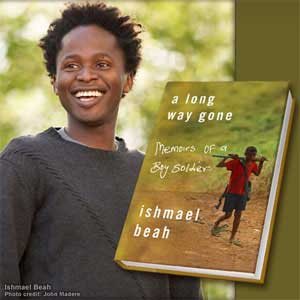
A Long Way Gone - Ishmael Beah


I had the good fortune, several years ago, to go to a small seminar that happened to have Ishmael Beah as the keynote speaker. I remember thinking to myself, "How can anyone who has been through such horrific things be so happy?" Since that day, Ishmael has always been one of the people I try to model myself after. If he can wake up and live life with a smile on his face, so can I.

Even though this was my second time reading A Long Way Gone, I was still as shocked and saddened by the contents of the novel as I was the first time I read it. From scenes with babies that have been shot to death, dismembered community members and imams that have been burnt to death, their remains eaten by animals, A Long Way Gone is certainly a blunt-forced reminder of the terrible cruelty that humans can inflict on one another. Yet, amongst all the horror, Ishmael finds a way to provide bittersweet glimpses of human warmth and kindness. Despite it's grim nature, A Long Way Gone still leaves you feeling hopeful.

A Long Way Gone is certainly its own type of coming-of-age story, and one that I think everybody should read. I don't want to presume what an individual reader can get out of A Long Way Gone, because I think the message gleaned from this memoir is probably different and deeply personal for each reader.

However, I can say that I deeply admire Ishmael's bravery and openness in discussing the horrifying nature of civil war and becoming a boy-soldier. I feel like his memoir provides its readers with a better understanding into this often forgotten world, while also calling into focus the blurry line between right and wrong.

The Circuit


The Circuit is a fascinating, heart breaking and true account of the life of migrant families, more specifically the children of these migrant families. I will admit that, initially, I was hesitant to read it. I thought it would be like every other propaganda-novel about immigration, trying to persuade you one way or the other. I was surprisingly relieved when I realized this story was not like the others. I was immediately sucked in and read the book in one sitting.

While I knew, prior to reading The Circuit, that is was based in truth, I did not get a "non-fiction" feel from the book. In fact, most of the time I kept hoping that I would get to the end to find out that none of this really happened. Each little episode of loss, and the consequent emotions, had me reaching for the tissues. That being said, I was rooting for Panchito the entire time, despite the fact that I knew what was coming (it's not called The Circuit for nothing!).

I was able to see bits and pieces of myself in the novel as well. I grew up in a military family, and could commiserate with Panchito over the anguish and disappointment of having to leave a place you have just grown to love, only to start all over: new friends, new home, new school. On the other hand, I could also relate to the happiness and excitement felt when you get to return to that place. And, while I wasn't deported from the place I called my home for most of my life - I did have to leave (I'm not a citizen of the country I grew up in), and have yet to return.

I think this book is a must-read for any and everyone. It does not matter where you stand politically. This book will pull you in with its emotional, powerful language and will remind you of the hardships that come with trying to attain the American Dream. And, if nothing else, it will remind you of the cyclical nature of life and leave you feeling hopeful that, next time, maybe things will be better.

Saturday, October 22, 2011

Shipwreck at the Bottom of the World - Jennifer Armstrong

Shipwreck at the Bottom of the World is a great book if you are a fan of non-fiction, or have an innate interest in ships or shipwrecks. It is an incredibly detailed account of Ernest Shackleton, his men and their ship as it gets stuck in the ice, and falls to pieces, during their attempt to be the first crew to cross Antarctica. It is most certainly an impressive story of endurance, hardship and miracles.

Shipwreck at the Bottom of the World is also full of real life photographs taken during the experience which, honestly, is the only reason I was able to keep reading the book. While I could tell that it was a well written account of the experience, I found that I struggled to stay interested. Even though it is full of little heart warming anecdotes (such as the Emperor penguins and their affinity for the banjo or how the sled dogs loved to chase the penguins), I wasn't totally consumed by the book.

I don't think my being bored with the book was really the fault of the author, so much as it was my own personal disinterest in the topic. I especially didn't like seeing the picture of the handsome man holding the two baby penguins on route to killing and eating them. I know they had to do it to survive, but I didn't need to see the picture of the cute baby penguins on their way to slaughter. It made me sad.

If I had been reading this book after watching Pirates of the Caribbean or Eight Below I may have been more drawn in, but since I just read The Book Thief, I was mostly just bored with Shipwreck at the Bottom of the World.

Sunday, October 16, 2011

The Book Thief


Markus Zusak is my new favorite author. The Book Thief has easily been placed in my five favorite reads of all time. Everything about this novel was interesting. It was narrated by death, which is more than appropriate considering the story takes place during World War II. The novel is incredibly sad, but every moment that occurs is so palpable that you can't pull yourself away from the book. The narrator, who is also a spoiler of endings, will have you laughing out loud in one paragraph, and running for tissues in the next.

The Book Thief speaks to the reader in so many ways. On one hand, it is the story of a girl, her 'family' and friends trying to live as normal a life as possible in Nazi Germany. On another hand, it is the sad story of World War II itself. On a different hand, it is the story of Leisel and her books, and discovering the power that words can have (something the narrator seems to have mastered). Every page of The Book Thief will have you on the edge of your seat.

The Book Thief is marketed towards adolescent readers, and I think it is done appropriately so. This novel speaks to the power of reading and words, and the power of close friendships, and does so in a way that most adolescents and all adults should be able to understand. It provides a totally different look into the Holocaust and Nazi Germany, and may be more engaging for some readers than The Diary of Anne Frank or Schindler's Ark (which are also both very good). This novel is also great for adolescents because it will allow them to formulate a plethora of questions about topics such as the different uses of point of view and voice, metaphors and similes and running themes (such as the color of the sky during death).

My only complaint about this novel being marketed towards adolescents is that too many adult readers will overlook it, simply based on where it is placed in the bookstore. This simultaneously heart-wrenching, heart-warming novel is too good to be overlooked. It answers so many unasked questions: What were young German girls and boys doing during WWII? What were the experiences of German families living near the concentration camps? Furthermore, it leaves you asking questions: Why the emphasis on the color of the sky? Is Death also a book thief? What more of communism?

On a personal note, I enjoyed that Max was from Stuttgart, because that is where I was born. So while I may not have been able to personally relate to every experience in the novel (despite the fact that I read every moment as though I was the one living it), I did have that - and somehow, perhaps in the spirit of Max's character, that small connection was very powerful.

Esperanza Rising


Pam Munoz Ryan's Esperanza Rising really hit close to home for me, which was totally unexpected. My great-great grandfather, David Patten Black, fled to Chihuahua, Mexico in the late 1800's, to escape the marshals that were hunting down polygamists. There, he met my great-great grandmother (and a second wife), and lived a successful life as a horse-breaker and the sheriff of his town. But, in 1912, Poncho Villa came through and told everyone to clear out unless they wanted to meet their maker. My great-great grandfather's neighbors didn't want to leave their settled land, successful farms, etc. He didn't want to either, but he picked up his wives, kids and a few belongings and left for safety. He did, however, feel an obligation to his neighbors and friends and came back to try to convince them one more time to leave with his family, but when he got back into town, it was too late and everyone had been slaughtered and robbed.

His family, much like Esperanza's family, had to start again with nothing but $25.00 to their name. They had to leave the life they knew for a life of impoverished uncertainty. I found it really interesting that my family history aligned so neatly with the events that occurred during Esperanza Rising. That all being said, my family didn't become migrant workers, and weren't driven out of their home country. Nevertheless, the similarities are there.

In general, Esperanza Rising offers a great look into the experiences of Mexican families during the Mexican revolution, as well as migrant families and workers. It also tackles class issues and hierarchy within the Latino community, something which I think is often overlooked. Even more interestingly, Esperanza Rising also addresses the differences of being Spanish, Mexican, etc., and how people are treated differently based on their roots. Again, this is not a topic that is often discussed as being a problem outside of the dominant culture.

In specific regard to adolescents, I think this novel is a valuable read. It really provides those "windows and mirrors" opportunities. Students will be able to look into Esperanza Rising and see themselves in Esperanza's character. They will be able to identify with teen angst, identity struggles as well as have the opportunity to address the idea of a world outside of themselves (moving away from egocentricity). They will also be able to look into the text and empathize with the struggles of a friend or a neighbor going through financial troubles, or with Esperanza herself. These are important experiences to have.

Also, they will get to learn a few new words in Spanish. An ever expanding vocabulary is never a bad thing.

Friday, October 7, 2011

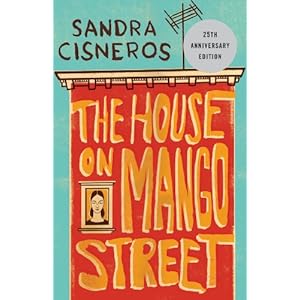
The House on Mango Street, Sandra Cisneros


There are a lot of different themes running through this book, but the one that I connected most with was the theme of a young girl trying to find herself. Having grown up in a culture that "requires" women to grow into a social role, I can identify with Esperanza's struggles. Every thing she says and does is underscored with the issue of trying to figure out where she fits and how she needs to adapt. It broke my heart to read the passage about her name (pg 10 - 11), especially when she says, "She looked out the window her whole life, the way so many women sit their sadness on an elbow. I wonder if she made the best with what she got or was she sorry because she couldn't be all the things she wanted to be. Esperanza. I have inherited her name, but I don't want to inherit her place by the window" (pg 11). Those words echo the feelings so many girls have, even in today's society. I personally struggle with feeling like my own thoughts, ideas and desires are suppressed or unwelcome based on the fact that they don't match society's rules and regulations for what is acceptable from females. It's hard to find yourself in a man's world.

Nevertheless, The House on Mango Street is full of hope. All the while, the reader knows that Esperanza isn't the kind of girl who takes what life gives her. She tries to make the world work the way she wants it to, and she constantly clings to her desire to break away from the norms which is illustrated best in "Four Skinny Trees" (pg 74 - 75). But trying to change her world doesn't come easily (it comes with sexual assault), and not without watching other girls, like Sally, fall victim to the life she doesn't want. The House on Mango Street reads like a diary, which I think makes it seem all the more real. You know that you are reading the best and the worst, her hopes and her dreams, and you want her to succeed.

I think that The House on Mango Street is a great book for adolescents to read. It speaks loudly to the adolescent female population to have hope and to, for lack of a better phrase, "be the change you want to see in the world." It speaks to the racism, poverty, danger, shame associated with communities like Esperanza's while also speaking to the feeling of "otherness" and feelings of inadequacy that adolescents of all backgrounds experience. No matter who you are, there will be something in The House on Mango Street that speaks to you.